
FROM LASER SCAN TO FULL-SCALE MUSEUM REPLICA
About the İvriz Rock Monument
Dating to the 8th century BCE, the İvriz Rock Monument is one of the most remarkable examples of Neo-Hittite rock art in Anatolia. Carved into a natural rock face near the İvriz spring in Konya, it depicts King Warpalawa of Tuwana worshipping Tarhunza, the god of storm and fertility. The wheat and grapes held by the deity symbolise abundance, agricultural prosperity and the life-giving power of water.
DIGITAL CAPTURE & DATA PREPARATION
The process began in Ereğli, Konya, Türkiye, where our specialist team captured the İvriz Rock Monument through high-resolution laser scanning.
Following extensive digital refinement, the scan data was cleaned, reconstructed and optimised while preserving the monument’s intricate reliefs, inscriptions and natural rock texture.


3D PRINTING
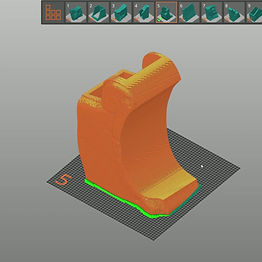
After detailed production planning, the digital model was divided into production-ready sections. The 6 × 5-metre, full-scale replica was manufactured in more than 150 individually 3D-printed parts
PRE-ASSEMBLY
Each section underwent surface refinement and workshop pre-assembly to ensure accurate alignment, seamless transitions and a precise relationship between all components.


ON-SITE ASSEMBLY
The completed sections were then transported to the museum and assembled on site. The joints were carefully filled and blended to create a continuous rock surface.
ARTISTIC FINISHING
Final texture corrections, polymer-based protective coatings and layered artistic painting were applied to reproduce the natural tones, depth and weathered character of the original monument.


FINAL INSTALLATION
The completed replica is now on display at the Istanbul Archaeological Museums’ Museum of the Ancient Orient.